Showing posts with label teaching. Show all posts

18 August 2009

Marva Collins

I had no idea who this woman was before about 15 minutes ago. I was doing some research for a completely different project and came across some of her quotations and I can't remember the last time I reacted out loud to something I read on quotes website. Take a read...

“I have discovered few learning disabled students in my three decades of teaching. I have, however, discovered many, many victims of teaching inabilities.”


Marva Collins is an iconic American educator who started Westside Preparatory School in an impoverished neighborhood of Chicago. Unfortunately, the school closed down in 2008 after 30 years due to declining enrollment and funding. Collins championed the Socratic method. I've heard many a teacher poo-poo this method, but she saw true value in its use when it came to teaching those students who were deemed "unteachable". Her method is described as follows:

The first step is to select material with abstract content to challenge students' logic, and that will therefore have different meaning to different students, in order to aid discussion. This is done specifically to teach children to reason.

Next, the teacher should read the material, because unknown material cannot be taught. New words, the words to watch, should be listed, and taught, for pronunciation, use and spelling before the material is read. Without this step, the reading is meaningless.

Next, one begins a series of pertinent questions as the reading progresses, starting with a reference to the title, and a question about what the material is about. Predictions should use logic, reasoning and evidence without fallacy. The reading must be out loud, so the teacher can ask questions at pertinent points. Students are taught to test their reasoning. Afterward, they write daily letters to the author or characters, and write a critical review. Why is the work important to them? The child must be taught to refer to what was previously learned to support their opinions.

In the Socratic method, the rate of information is controlled by the teacher. Properly paced, this encourages participation, reducing discipline issues and encouraging self-discipline. The program specifically avoids work-sheets and inane busy work. It establishes an intellectual atmosphere, a general attitude suspending judgement, and examining reasoning.


(http://en.wikipedia.org/wiki/Marva_Collins)

I think the rationale for this method can summed up in another remark made by Collins:

“The essence of teaching is to make learning contagious, to have one idea spark another.”


It's time for a little introspection in education and whole lot less looking at standard test scores to diagnose what's wrong with our students. It's time to start asking what is wrong with us...

04 May 2009

Just how fast are we moving?

In an in-service on teaching literacy across the curriculum, my partner Cathie shared this anology with the group, and I thought it was so relevant and terrific:


60 minutes = 5000 years that people have had access to writing systems

On this scale, there were few significant media changes until about 7.5 mins ago -printing press came into use in Western culture.

2 minutes ago - - - the telegraph, photograph, and locomotive

1.5 minutes ago - - - telephone, phonograph, rotary press, motion pictures, automobile, airplane and radio

1 minute ago - - - talking picture

In the last 40 seconds - - - the TV

In the last 6 sec - - - the computer

Last few - satellites, laser beams, translation machines, interactive telecommunications, Internet, video games

We're always playing catch-up...

Are You Ready?

I'm learning more and more about the emergence of what is being called SPOT (Smart Personal Object Technology). It's the brainchild of Microsoft (no surprise there) to create software and hardware to personalize household electronics and everyday devices to make their uses more versatile. This includes everything from watches to coffee makers. Take a look:


Crazy, ain't it!! I just wonder how long before these sorts of gagets start appearing in our classrooms, and how ready we're going to be...

22 April 2009

Critical Literacy and Religion: An Androgynous Jesus?


How's this for an interesting lesson in critical literacy for religion teachers! I have never seen Christ rendered in any art form quite like this. The following excerpt comes from a website that deals with Christ iconography:
This image "Jesus of the People" by Janet McKenzie portrays Jesus as relatively androgynous and as black. Edwina Sandys' Christa portrays Jesus as a woman hanging on the cross, and was extremely controversial. Reinterpretations like these make the symbol of Jesus Christ accesible to people who do not wish to accept the traditional white European male image. Many feminists have chosen to reinterpret Christ, not visually but theoretically, and this is often labeled feminist christology.<(http://www2.kenyon.edu/Depts/Religion/Projects/Reln91/Gender/qchristology.htm)

This exercise is a great opportunity to look at conventional portrayals of Jesus and discuss why they were chosen or deemed acceptable? By whom? For what purpose? Are there any underlying issues of power that are implicated in certain portrayals of Christ? Why are most renderings of Christ reflect a man of northern European descent as opposed to Middle Eastern ancestry?

I would LOVE to hear what students have to say on this. I think this sort of activity is guaranteed to promote high levels of engagement because:
1.) it's inquiry based learning
2.)it involves a great deal of inductive reasoning (your boys will thank you)
3.)it's highly controversial - what teenager doesn't like to challenge the status
quo?
4.)students are doing all the meaning-making, while participating in highly academic
processes(research, synthesis, evaluation, etc.)

In the past, I have challenged my students to create their own artistic renderings of Jesus and the diversity is astounding. Their creations often reflect their own personal relationship with Jesus. I have often taught this sort of lesson in the context of discussing how the four gospels provide very distinct representations of who Jesus is (supported by an article called "The Four Faces of Jesus"). I have done this lesson with grade 10 students taking the Christ in Culture course. A sure winner!

17 April 2009

A Great Analogy


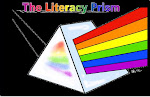
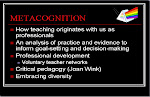
I think of our journey to transforming how we talk about teaching and learning literacy in the YCDSB in terms of the Medicine Wheel. The next couple of years will involve a lot of building and awareness, and no doubt there will be struggle. I think the greatest struggle will be in convincing teachers that they're already doing a lot of the good work that the Literacy Prism is promoting. Like with any initiative - whether it's new or a re-packaging and formalizing existing structures - there is bound to be initial resistance because people are afraid of what they don't know or are not comfortable with. I just thought I'd post this because when I came across this diagram, it so precisely represented what I was thinking about our progress to this point.